
From “Buying a Box” to “Buying the Right Box”: Five Decision Dimensions for Adult Golf Club Set Selection
In 2026, the global golf equipment market is projected to reach $8.5 billion, with complete club sets still accounting for the largest share of beginner purchases. However, after testing five complete sets ranging from $199 to $1,599, MyGolfSpy found that “the technology gap between sets is often smaller than marketing suggests, but there are real differences in club selection, bag quality, feel, and value.” This means the core challenge when buying an adult club set is not “whether to buy a set,” but “what kind of set to buy.”
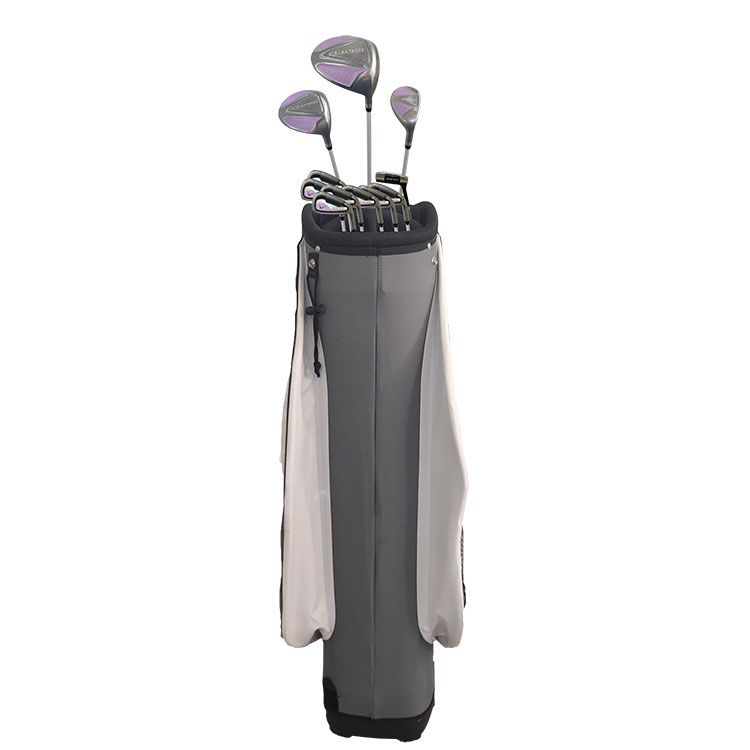
The First Dimension: Set Composition—Beginners Don’t Need 14 Clubs
Golf rules allow a maximum of 14 clubs, but beginners need far fewer. Retailer Scheels’ expert guide notes that beginners are usually best served by sets of 8 to 12 clubs, while only experienced golfers need a full 14-club setup. MyGolfSpy’s beginner guide is even more streamlined: a smart beginner club setup consists of a driver or 3-wood, a hybrid, a 7-iron, a 9-iron, a pitching wedge, and a putter.
The rationale for trimming down isn’t just about saving money. When swing speed hasn’t yet stabilized, too many club numbers only creates decision anxiety. In a well-designed set, shaft weight, flex, and torque characteristics are tuned as a unified system, helping beginners build a consistent swing rhythm. Piecing together individual clubs means each club feels different, forcing the brain to constantly recalibrate—a disastrous burden for beginners.
But trimming down has its traps. In “7 Signs You Bought the Wrong Set,” MyGolfSpy points out that many beginner sets have too large a distance gap between the pitching wedge and sand wedge, leaving the critical 80-to-100-yard range as a blind spot—one of the most common approach distances in golf. When buying, check whether the set covers the complete distance chain from tee shots to short-game shots.
The Second Dimension: Clubheads—Forgiveness Above All
For the vast majority of amateur golfers, the first criterion for clubheads is forgiveness, not feel or looks.
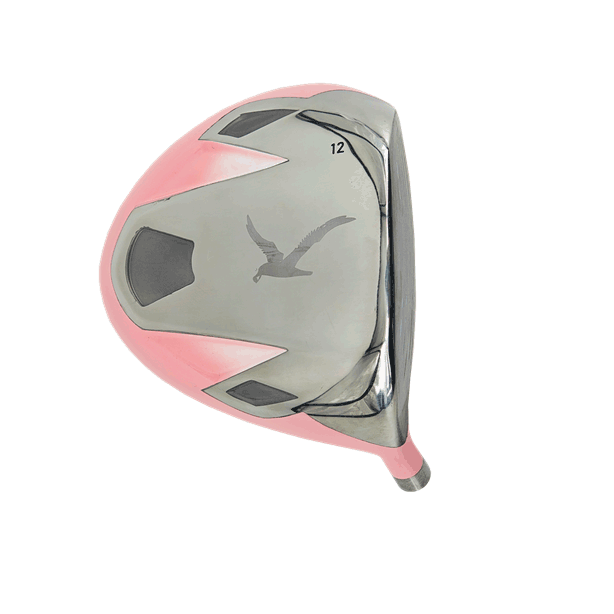
Scheels experts recommend looking for clubhead designs labeled “game improvement” or “high MOI.” These heads have a larger face area, wider sole, and perimeter weighting, providing greater stability on off-center hits. Some heads also feature “anti-slice” designs specifically targeting the most common slice problem among beginners.
Clubhead materials and manufacturing are also worth understanding. Irons in beginner sets are mostly cast stainless steel (17-4 or 431). Casting allows the center of gravity to be positioned lower and farther back, so even on off-center hits, the ball can still maintain an acceptable trajectory, and the head is more durable against impact. Forged irons offer better feel, but they are more expensive and less forgiving, making their value proposition less compelling for beginners.
The Third Dimension: Shafts—Flex and Weight Determine Impact Quality
The shaft is “the most important part” of the entire set. Two core parameters are flex and weight.
Shaft flex is usually marked by letters, from softest to stiffest: L, A, R, S, X. Most beginner sets offer R (Regular) or A (Senior) flex. This is the safest choice for beginners with slower swing speeds—softer shafts can create a greater “whip effect” during the swing, helping those with slower swing speeds launch the ball higher and farther. If you mistakenly choose S flex, the ball often won’t get airborne, and the player may mistakenly think they “lack power.” MyGolfSpy’s advice is clear: “The key is not to guess. Even a basic fitting can help determine the right flex range.”
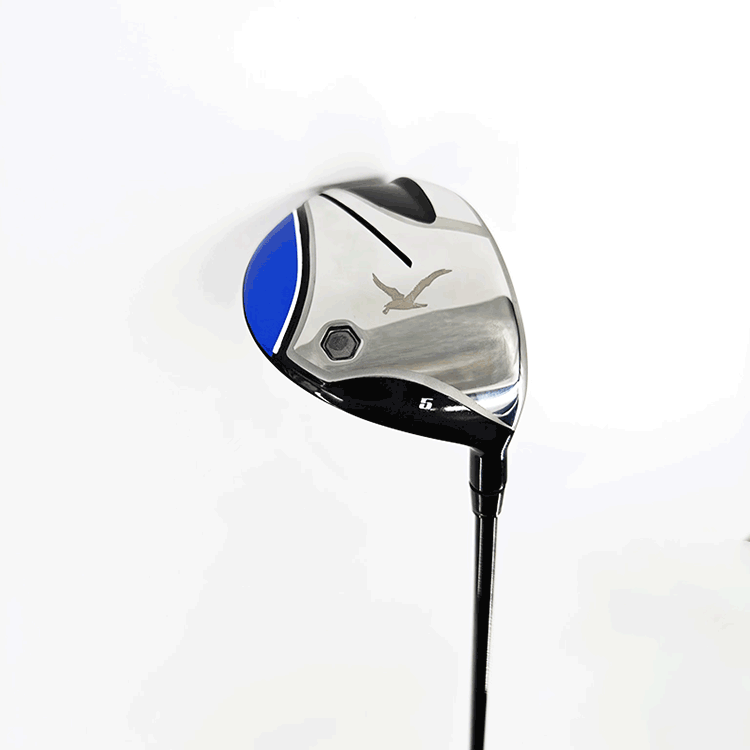
Shaft weight is directly related to material. Drivers, fairway woods, and hybrids in beginner sets usually use graphite shafts to increase swing speed and forgiveness, while irons more often use steel shafts for better balance and control. But one easily overlooked issue is that many beginner sets come with ultra-light graphite shafts and oversized heads. While this helps slower-swinging players, for naturally athletic beginners it may “feel like a toy” and lack stability. When buying, judge whether the weight is appropriate based on your own swing speed, not the “beginner” label.
The Fourth Dimension: Grips and Shaft Length—Overlooked Fit Details
The grip is the golfer’s only point of contact with the club, yet it is often overlooked. MyGolfSpy recommends focusing on three elements: whether the size fits your hands (standard, midsize, or jumbo), whether the texture is comfortable, and whether it is worn and slippery—the latter being especially common in used sets.
Shaft length also requires basic fitting. Height is not the only determining factor; arm length and posture are equally important. Scheels notes that men, women, juniors, and taller or shorter players all have corresponding length options. A practical test: at a normal address position, the sole of the clubhead should sit flat on the ground without requiring you to bend excessively or lift your arms to accommodate the club.
The Fifth Dimension: Budget and Channel—Where Should Money Go
MyGolfSpy’s testing covered everything from the $199 Amazon Basics six-piece set to the $1,599 Stix C02 Compete set. The testers concluded that within this price range, putter quality differences are often the most noteworthy. The putter in a $199 set is “the most basic of the basics,” while CNC-milled face putters or branded mallet putters in higher-priced sets offer clear improvements in stability and alignment assistance.
A practical reference for budget allocation comes from 2026 market data: the most common price range for club sets is the mid-range segment. This segment mostly uses cast irons, which are highly forgiving and durable. For beginners, the marginal benefit of technology outweighs the feel payoff of expensive forged irons.
On purchasing channels, industry experience can be summed up as “compare prices online, test feel offline.” Large sporting goods chains have ample inventory and frequent seasonal discounts, and you can directly inspect grip wear and whether headcovers are complete. Specialty golf shops usually offer basic fitting services. Although prices are slightly higher, follow-up maintenance and consultation are more convenient. Used sets are also a reasonable option, but pay special attention to grip condition and groove wear on the clubface.
A Changing Industry Consensus
The old idea that “a bag must be all one brand” is being dismantled by data. The 2026 Golf Gear Marketplace Report survey of 504 active golfers found that 80% of golfers mix brands based on the performance of individual clubs, and the primary reason for changing clubs (36%) is “pursuing better performance,” while only 1% change clubs because they “look good.”
The implication of this trend for buying adult sets is that the value of a set lies in “consistency at the starting point,” not “exclusivity at the endpoint.” A well-configured beginner set can help beginners build a stable swing rhythm and distance perception. But as skills develop, replacing individual clubs based on actual shot data is already common practice in the industry. When buying, there is no need to pursue a “one-step solution.” Instead, focus on whether the equipment provides a solid enough, forgiving enough starting point—so the golfer can spend energy on the swing rather than fighting the gear.