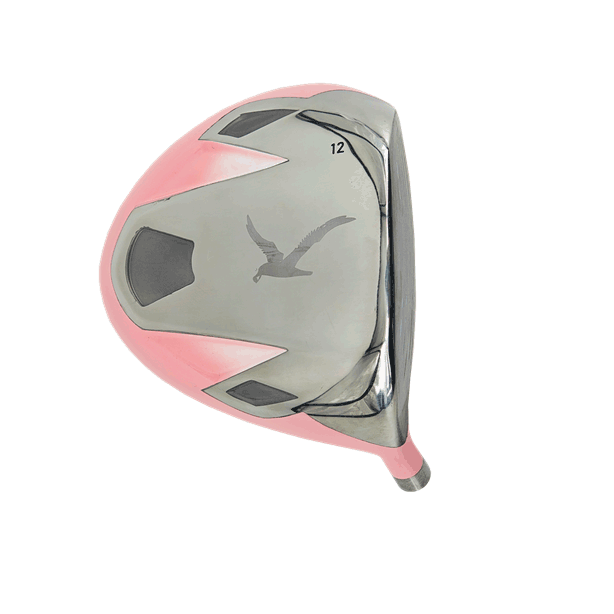
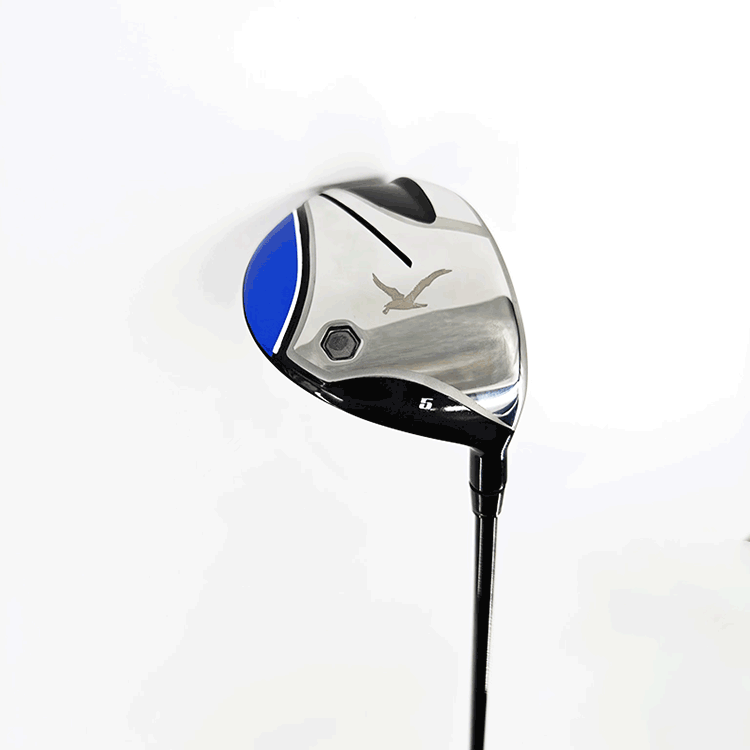
Once viewed merely as a "compromise alternative" to long irons, hybrid clubs have now become a staple in the bags of older and female golfers. Driven by shifting demographics and continuous improvements in equipment design, the adoption of hybrids has accelerated rapidly within these groups, propelling the category from the fringes to the mainstream.
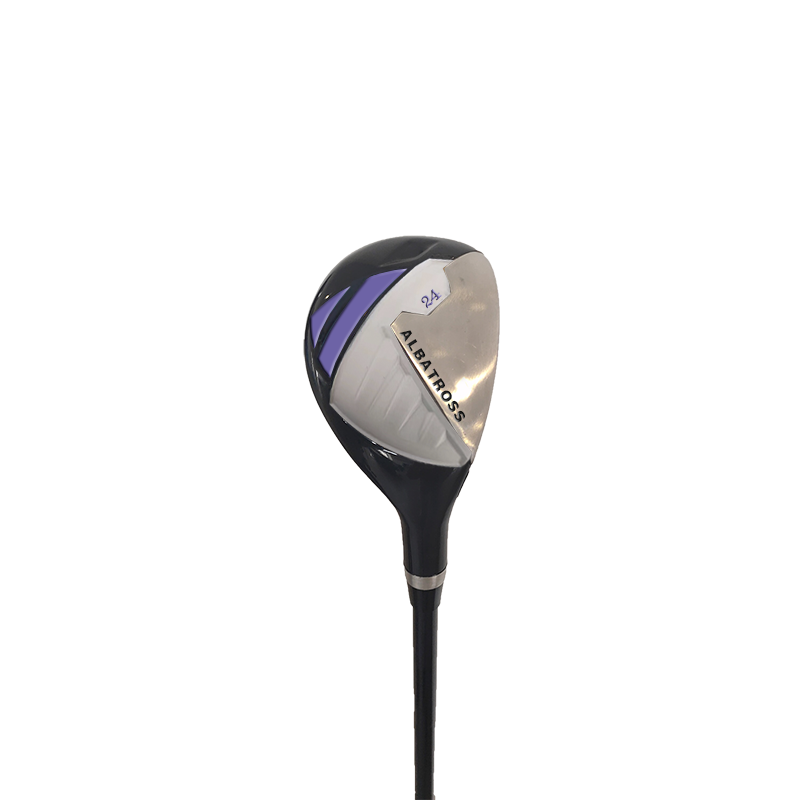
Traditionally, hybrids were seen as a bridge between irons and fairway woods—a category often dismissed by low-handicap players. However, for older and female golfers, the role of the hybrid has evolved; it is no longer just a transitional tool but a direct replacement for difficult-to-hit long irons like the 3, 4, or even 5-iron.
"For golfers with swing speeds below 85 mph, achieving sufficient launch angle and stopping power with long irons is a challenge; the hybrid’s low center of gravity and wider sole design solve exactly that problem," says Mark Wilson, a veteran coach and member of the International Clubmakers Guild (ICG). He notes that hybrid head designs allow players to launch the ball with a shallower angle of attack—particularly from the fairway or light rough—offering far greater forgiveness than traditional long irons.
This ease of launch and forgiveness is particularly valuable for older golfers, whose swing speeds tend to decline with age, and for female golfers, who generally possess less raw power.
According to the 2025 equipment report by Golf Datatech, a golf market research firm, the usage rate of hybrids among male golfers aged 50 and older rose from 44% in 2020 to 63% in 2025; notably, over half of the respondents stated they had completely replaced their 3 and 4-irons with hybrids. The growth among female golfers was even more pronounced: hybrid usage jumped from 38% to 58% over the same period, while the average number of hybrids carried per player increased from 1.2 to 2.3. "We clearly see that female golfers no longer hesitate to purchase hybrid clubs; they are more concerned with which model makes it easier to get the ball airborne," revealed a purchasing manager at a major U.S. golf retail chain. The chain saw a 21% year-over-year increase in hybrid club sales for 2025, with women's models accounting for approximately 35% of that growth.
Faced with this structural opportunity, leading brands are rapidly adjusting their product strategies.
In 2025, Callaway launched the Reva hybrid series specifically for women, featuring lighter shafts (around 45 grams), higher lofts (up to 34 degrees), and a shallow face design to aid launch. TaylorMade enhanced the "High Launch" version of its Stealth HD series with a wider sole, optimized specifically for older golfers. Ping’s G-series hybrids have long been known for forgiveness; the 2024 G430 update shifted the center of gravity further back while offering lightweight carbon shaft options.
"We’ve noticed that many golfers over 50, when replacing their club sets, proactively ask to swap their 4-iron—or even their 5-iron—for a hybrid. It’s no longer just a coach's recommendation; it’s a choice they make themselves after experiencing the difference," a TaylorMade product manager stated at an industry forum.
Up-and-coming DTC (Direct-to-Consumer) brands are also following suit. PXG’s 0211 hybrid series highlights adjustable weighting, allowing golfers to fine-tune head weight based on changes in their swing power; meanwhile, Sub 70 launched an "ultra-easy-to-hit" hybrid featuring an oversized head volume (exceeding standard limits but remaining within regulatory compliance), specifically targeting older golfers and women.
The growing popularity of hybrids has also driven changes in retail services. More stores are moving hybrid demo areas from corners to prominent locations and equipping them with high-launch simulators to clearly demonstrate the differences in launch angle and carry distance between various hybrids and long irons. "We require our staff, when assisting customers over the age of 50 or female golfers, to first have them hit a 5-iron and a 5-hybrid side-by-side. Usually, it takes just three swings for them to feel the difference," says a store manager at a PGA Superstore in the U.S.
Custom fitting services are also increasingly catering to these two demographics. Many brands offer complimentary adjustments for shaft length, grip size, and loft angle to accommodate slower swing speeds and varying physical builds.
However, industry experts caution that more hybrids aren't necessarily better. After experiencing the benefits, some golfers might rush to replace all their long irons with hybrids; this can lead to illogical distance gaps and a lack of options—particularly when a low, wind-piercing shot is required.
"I generally advise older golfers to keep their 6-iron and higher-numbered irons, while replacing the 3, 4, and 5-irons with hybrids. Female golfers might consider adding a 6-hybrid as well, though this depends on their individual distance gaps," notes Wilson, a club fitter.
Additionally, since some high-end hybrids rival fairway woods in price, mid-range used models offer a great alternative for budget-conscious golfers.
As the global golfing population ages and female participation continues to rise, the hybrid category is expected to grow faster than the overall golf club market. Brands will focus on reducing shaft weight, optimizing the center of gravity in the clubhead, and creating designs that appeal specifically to women. Meanwhile, advancements in smart fitting tools may allow golfers to pinpoint the exact hybrid model that suits them best before making a purchase.
Older golfers and women are proving through their use of hybrids that the evolution of golf equipment isn't just about serving professionals—it is key to helping more people enjoy the sport.