I. Steady Growth of the Overall Industry, Set Products Become the Mainstream of Consumption
According to
global golf equipment industry research data, the global golf equipment market size reached $9.24 billion in 2025 and is estimated to increase to $9.64 billion in 2026. It is expected that the compound annual growth rate from 2026 to 2031 will stabilize at 4.37%, and the market size will exceed $11.94 billion by 2031, showing sufficient growth resilience. Among them, the club category is the core revenue pillar, accounting for 42.3% of the overall equipment market in 2024. Complete golf sets, with their characteristics of adapting to all-scenario hitting needs and lowering the purchase threshold for beginners, have far exceeded single clubs in sales and become the mainstream of market consumption.
From the perspective of consumption structure, the current market has formed a three-tier consumption echelon. The first tier is high-end flagship sets, targeting professional tournaments and advanced enthusiasts, with a single set priced at over 10,000 yuan and mostly adopting customized designs. The second tier is advanced half-set equipment, suitable for intermediate amateur enthusiasts, including 10-12 clubs, balancing performance and cost-effectiveness. The third tier is entry-level basic sets, mostly equipped with 8-10 clubs, some with dedicated golf bags, leveraging affordable prices to attract beginners, teenagers, and leisure consumers, and are currently the best-selling product type on domestic e-commerce channels. At the same time, the number of female golf enthusiasts has been increasing year by year, forcing major brands to launch exclusive sets with lightweight, colorful designs, and subdivided specifications, further opening up the segmented consumer market.
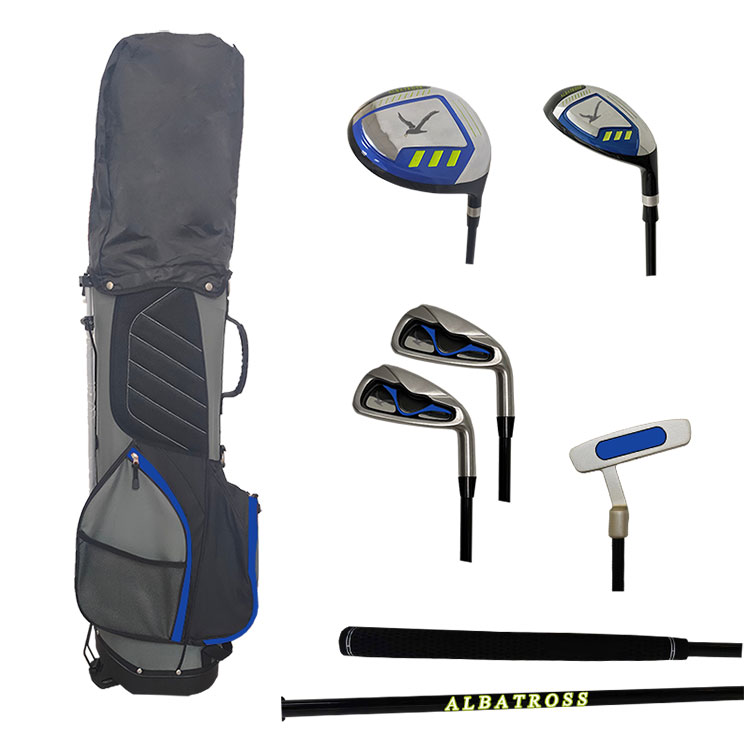
II. Disassembling the Composition of Standard Sets, Each Type of Club Has Its Own Role
Many entry-level consumers have a cognitive misunderstanding that the more clubs in a set, the higher the cost-effectiveness. According to the official rules of golf tournaments, a player can carry a maximum of 14 clubs per round. Conventional civilian sets scientifically match different types of clubs according to different hitting scenarios, with clear division of labor for each type of club, which is indispensable.
A complete standardized golf clubs set mainly includes five categories of clubs, adapting to hitting needs of different terrains and distances throughout the course:
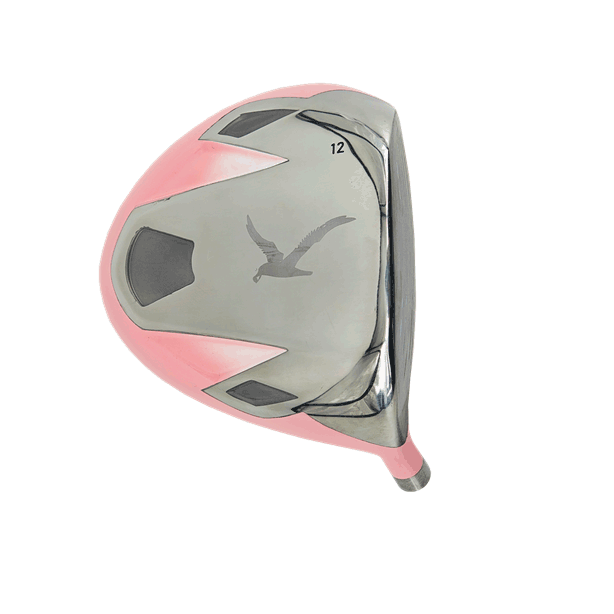
1. Driver
The core long club in the set, mainly used for long-distance tee shots on the tee box. It has the longest shaft and the farthest hitting distance, and has high requirements for the user's swing rhythm. High-end models mostly use titanium alloy head materials to reduce hitting error rate.
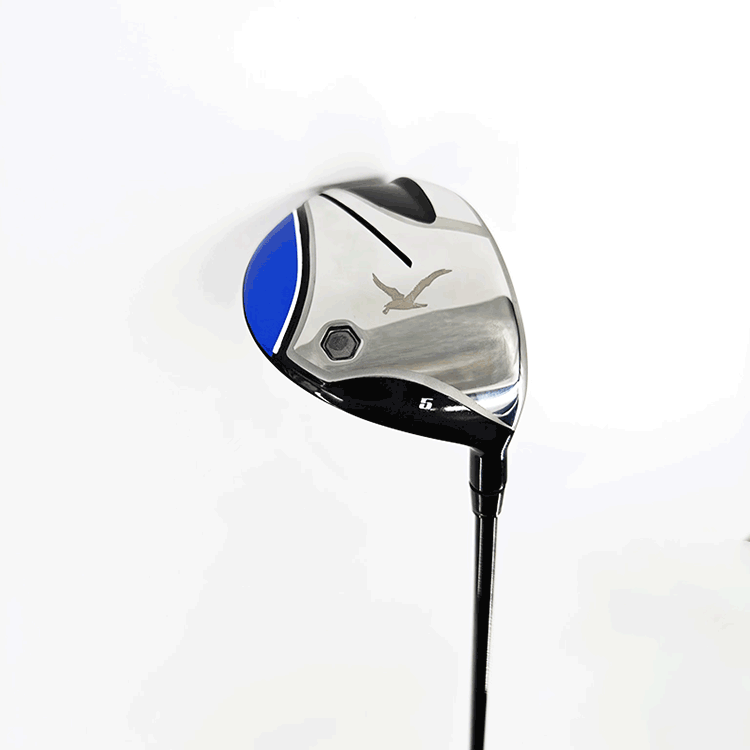
2. Fairway Wood
Suitable for medium and long-distance hitting on fairways and rough areas, making up for the lack of accuracy of the driver and the distance limitation of irons. It is a key equipment connecting long-distance and medium-distance hitting.
3. Hybrid
Also known as rescue club, it combines the distance advantage of woods and the easy handling characteristics of irons. It is easy to learn and has a high fault tolerance rate, mostly used for rescue shots in hazard areas and complex terrains, and is also a must-have club type for beginners.
4. Iron
The category with the highest proportion in the set, conventionally configured with multiple clubs from 4 to PW, covering medium and short-distance hitting. It is suitable for fairway attacks and precise hitting around the green, and is the most frequently used club by amateur players on the course.
5. Wedge & Putter
Wedges include sand wedges and pitching wedges, specially designed for short-distance rescue shots in bunkers and short grass areas; putters are only used for putting into the hole on the green, which directly determines the final score and is the short club category with the strongest technical attributes in the set.
III. Technological Innovation Empowers Products, New Materials + Intelligence Become New Development Trends
With the upgrading of materials engineering and intelligent technology,
golf clubs sets have long broken away from the traditional mechanized manufacturing model. In 2026, the industry as a whole has entered a new development stage of "technology empowering performance". Material upgrading, structural optimization, and intelligent empowerment have become the three core innovation directions.
In terms of materials, carbon fiber composite materials have gradually become popular and replaced traditional steel as the mainstream shaft material. Brand manufacturers optimize the carbon fiber layup process to customize differentiated energy conduction modes, adapting to the swing strength and rhythm of different users. High-end set heads adopt a titanium alloy + tungsten weight combination structure, which reduces the overall weight of the club while expanding the sweet spot, greatly reducing the hitting error rate for beginners. In addition, multi-material composite shafts have become standard for advanced sets. The reinforced design at the tip of the club head improves hitting stability, and the optimized rebound performance in the middle section of the shaft balances explosive power and hitting feel.
In terms of intelligence, leading brands have begun to integrate AI algorithms and micro-sensing technology into set design. Some flagship sets have built-in intelligent sensors that can collect real-time data such as swing speed, hitting angle, and club face opening and closing, and generate optimization solutions linked to mobile apps to help players correct their movements. At the same time, the industry's design concept has undergone an essential transformation, from the previous independent research and development of single clubs to systematic supporting research and development, ensuring that all clubs in the set have balanced hitting distance gradients and unified feel, fundamentally improving the overall actual combat performance.
IV. Consumer Avoidance Guide: Purchase by Grade According to Needs, Reject Blind Following
Combined with the measured data of industry workshops and the current situation of the consumer market, most consumers currently have the misunderstanding of blindly pursuing full configuration and high-priced products when purchasing sets, which not only increases the purchase cost but also affects the sports experience due to the mismatch between club specifications and their own level. Professional customizers in the industry give graded purchasing suggestions to adapt to different consumer groups:
1. Entry-level beginners (0-1 years of playing experience)
No need to purchase a 14-club full set. Prioritize choosing 8-10 basic entry-level sets, simplify complex club types, reduce the difficulty of getting started, control the budget within 2000-6000 yuan, and focus on fault tolerance and lightweight attributes.
2. Advanced enthusiasts (1-3 years of playing experience)
It is recommended to choose 10-12 half-set equipment, supplement fairway woods and wedges of different distances, and can separately replace the club types with shortcomings according to their own weaknesses to adapt to daily on-course actual combat needs.
3. Advanced players/professional players
Prioritize 14-club full-equipped flagship sets. If the budget is sufficient, you can choose private customization services to customize shaft hardness, club head angle, and weight parameters according to height, swing speed, and force habits, maximizing the player's competitive level.
At the same time, industry insiders remind that when purchasing, do not blindly believe that "full number of clubs = high performance". Some low-priced full sets on the market have problems such as chaotic club type gradients and shoddy materials, resulting in extremely poor hitting stability. Compared with blindly stacking club types, the internal compatibility of the set and personal comfort are the core evaluation criteria.
V. Future Industry Trends: Two-way Parallel Development of Mass Popularization and Customization Upgrading
Looking ahead, the global golf clubs sets industry will present a polarized development pattern. On the one hand, mass popularization has become the mainstream trend. Affordable and cost-effective sets continue to be popular, and many affordable brands have entered the track, breaking the monopoly pattern of high-end brands, lowering the price of entry-level sets, further reducing the participation threshold of golf, and tapping the consumption potential of the sinking market.
On the other hand, the high-end market is transforming towards refined customization. Standardized mass-produced sets can no longer meet the personalized needs of advanced players. Private customized sets and local modification and optimization services will become new profit growth points for leading brands. At the same time, research and development of green and low-carbon materials, lightweight intelligent accessories, and female-exclusive segmented sets will become the core R&D hotspots in the industry in the next 2-3 years, promoting the golf clubs sets industry to upgrade from "equipment sales" to "professional sports solutions".
Overall, the
golf clubs sets industry is still in a period of growth dividends. Technological iteration, expansion of consumer groups, and innovation of segmented categories will continue to drive the development of the industry. For consumers, clarifying the configuration logic of sets and purchasing rationally according to their own level can truly exert the value of equipment; for practitioners, balancing cost-effectiveness and product performance and laying out segmented tracks will be the key to seizing market share.